Without it you can still try pasted faces on the ready scenes.
Draw a new scene
The lab counts the faces in each picture. When the count is wrong it draws again, up to three times, and shows you every try.
Try it with your face
Pick a scene, then tap a question mark to take that seat.
For the best fit: looking at the camera, good light. Tap a filled seat to empty it again. The test faces are made up people, not members. Pasted, your photo stays on this phone. Redrawn, the face you picked is sent to an image model in Germany to draw you in, and nothing is kept.
How reliable it is
Each scene was asked for a set number of people. It passes when every one of them came back as a seat a real face can sit in: big enough to know, turned toward us, and not hidden. A scene that fails is drawn again before the host sees it, so what a host waits for is the pass rate with one more try.
Side by side
The same table, four ways. The faces in every one are pasted whole: moved, turned and scaled, never redrawn.
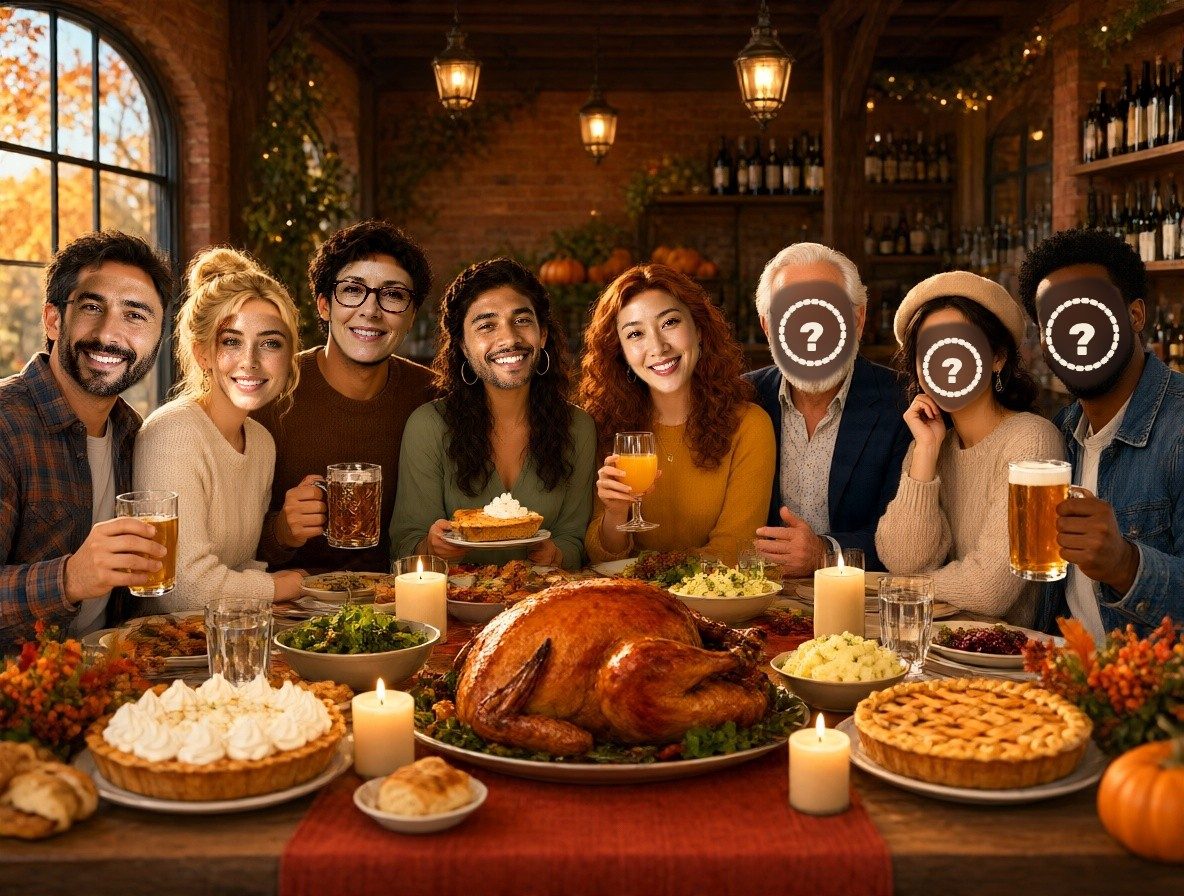
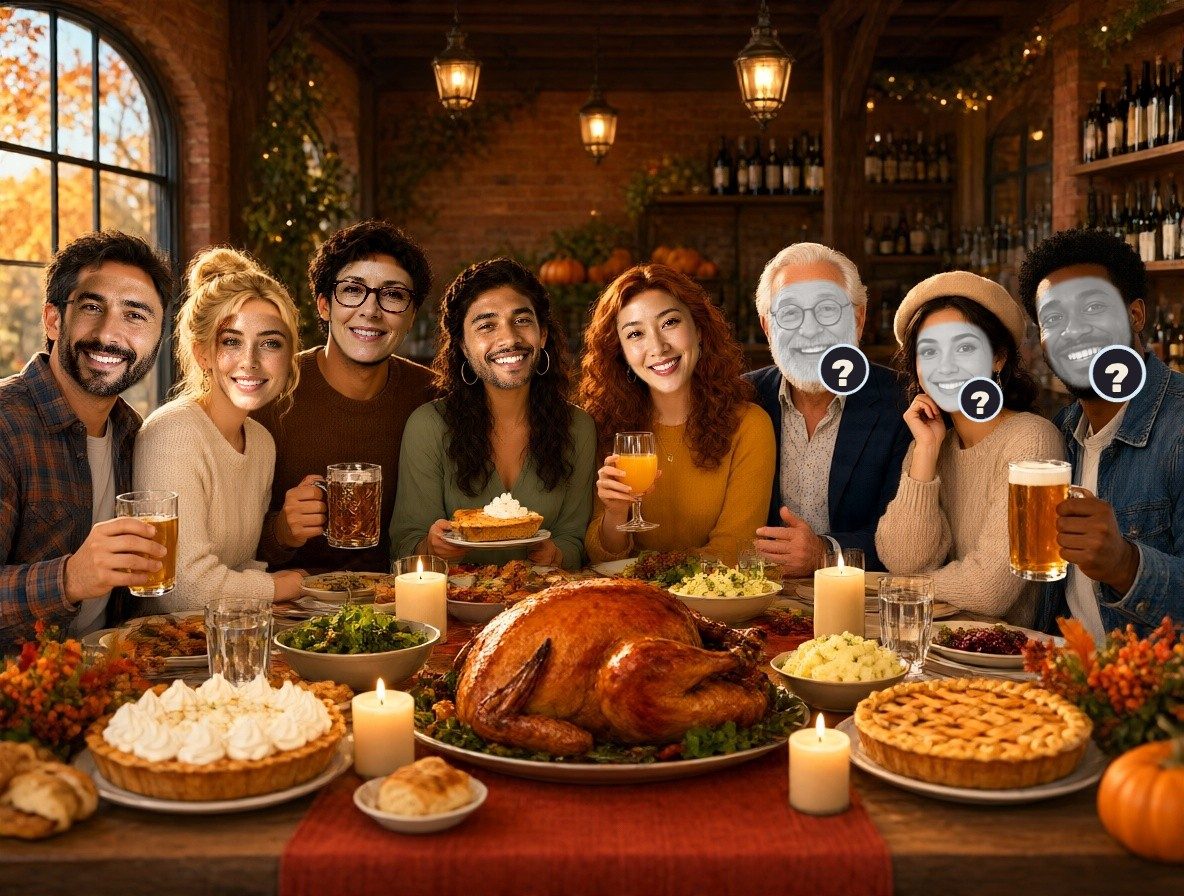
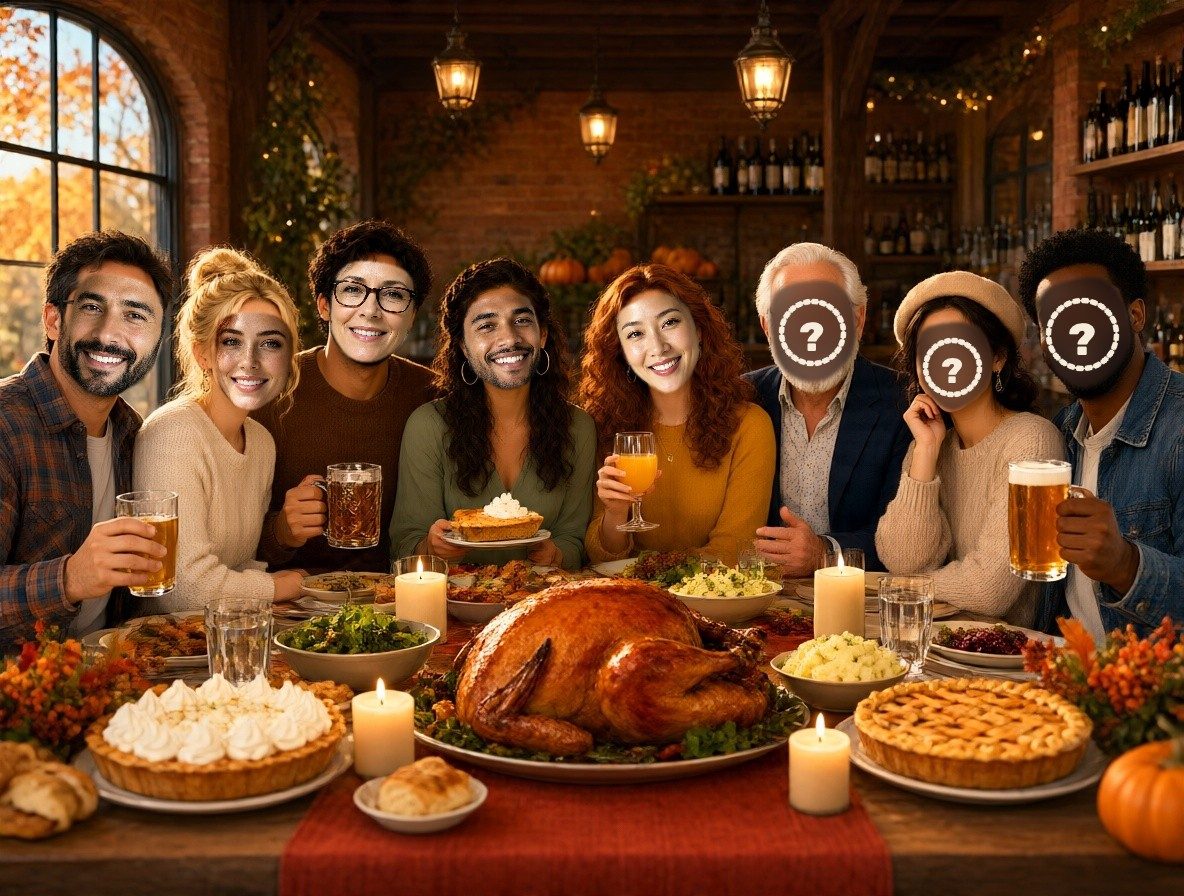
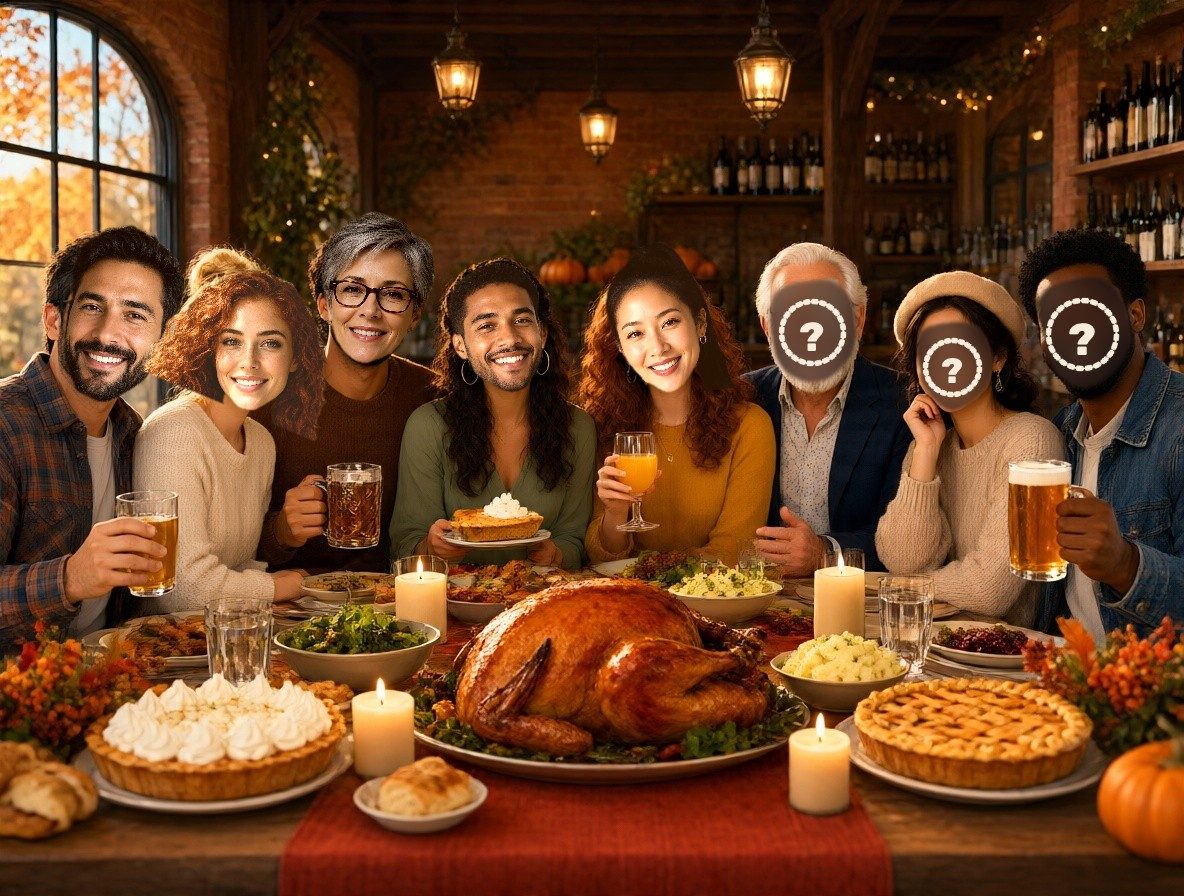
Every scene, as it came back
Twenty four scenes, eight plans in three styles, each filled two thirds with test faces and the rest open. Not picked: the failures are here too.
What it tells us
The drawing is the reliable part. Asked for a number of people facing us, the scenes come back with that number nearly every time, faces large and front on.
The faces blend well when the scene is drawn in a soft, lifelike style, and matching the light matters more than anything else.
A face goes into a drawn person's hair and clothes. Fun at a dinner, odd when the drawn hair is nothing like yours. Letting each person pick their own seat, as this page does, turns that into a choice.
Twelve is the edge. At twelve the faces are small on a phone, and the misses come from big groups.